Search

HarvardScience is a publication of the Harvard Office of News and Public Affairs devoted to all matters related to science at the various schools, departments, institutes, and hospitals of Harvard University.
Harvard Science animal, vegetable + mineral
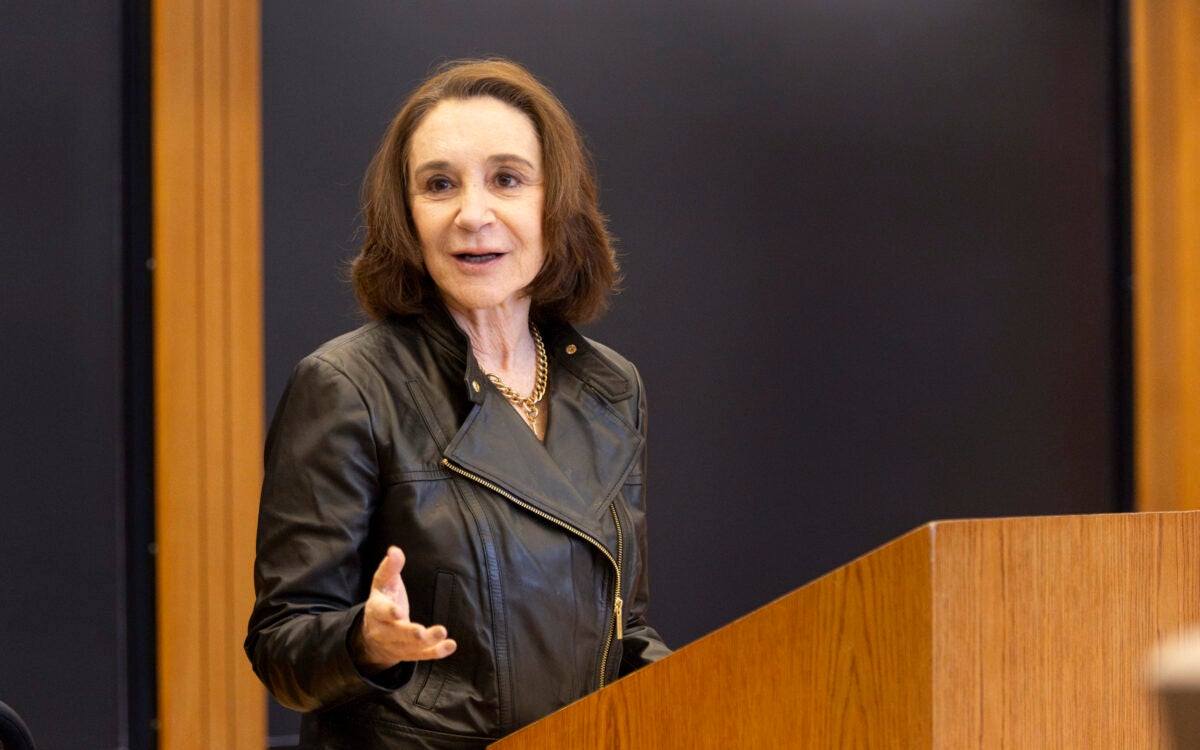
+ Enlarge Image Darlene Ketten examines X-rays of marine mammals.

Photo by Kris Snibbe/Harvard News Office

Seeing what they hear, to better understand ourselves

HMS assistant professor examines marine, land mammals for insight on hearing

September 23, 2008

Alvin Powell
Harvard News Office

It was a long drive from St. Louis to Florida, but Darlene Ketten had finally made it. Standing in the warm surf of St. George Island, she watched with delight as tiny, colorful bean clams popped out of the sand and then quickly reburied themselves as the waves foamed around her calves.

“It was gorgeous, with incredible soft, white sand,” Ketten recalled. “In the surf were minute clams — pink, blue, orange and gold — popping out of the sand and then disappearing…. I dipped my hand in the water and tasted it.” 

The year was 1971 and Ketten, then a recent graduate of Washington University in St. Louis, had made the pilgrimage to quench her years-long curiosity about the ocean. That curiosity would not only fuel her drive across America, it would also color her subsequent career as an authority on human and animal hearing, as a specialist in imaging and analyzing cochlear implants at the Massachusetts Eye and Ear Infirmary (MEEI), and as a scientist at Woods Hole Oceanographic Institution.

Working under an unusual joint appointment between Harvard Medical School and Woods Hole, Ketten, an assistant clinical professor of otology and laryngology, examines how ear structures and changes in them affect hearing. She probes the inner ear of many species, in both healthy and ill individuals, searching for clues as to how changes brought about by both evolution and disease affect hearing.

Ketten keeps her feet in the water today by walking beaches around the world to examine stranded marine mammals for clues about how they got there. Her shoreline necropsies look for ailments that might cause an animal to beach itself, with particular attention paid to whether manmade noise pollution and hearing damage played a part.

“She is at the forefront of understanding the issue of sonar on marine mammals, particularly in whales,” said retired Navy Adm. Richard F. Pittenger, former oceanographer of the Navy and currently special assistant for strategic planning at Woods Hole Oceanographic Institution. “She’s riveting, a wonderful public speaker, and very good with people. She’s one of the most adventurous people I know.”

Intrigued, then in love

Born in St. Louis, Ketten grew up far from the sea. She arrived at Washington University thinking she would major in French, but a required biology course introduced her to the nearby rivers and ponds. She was drawn by the mysteries hidden under a pond’s placid surface or a river’s moving waters. A class where the students used a net to dredge up bottom-dwelling creatures inspired her imagination and made her wonder what the vast oceans might hold.

“In and around those rocks [on the bottom], this entire community is opaque to you,” Ketten said. “If just a little stream is that interesting, what would the ocean be like?”

On graduating, Ketten decided to find out for herself. She landed a part-time teaching job at Florida State University in Tallahassee and planned to teach while taking classes in marine biology. She persuaded her sister and a friend to join her on the car ride to Tallahasee. On arriving, after dropping off their bags at the motel, she told her companions to get back in the car for the drive to St. George Island.

A long, narrow barrier island on Florida’s panhandle, St. George would become a favorite of Ketten’s in subsequent years. She brought classes to the beach on field trips and returned often on her own. “The ocean just sucked me right in,” Ketten said.

A few years later, she moved to Massachusetts and took a job at the Massachusetts Institute of Technology (MIT), working in a lab examining ocean chemistry. Ketten studied tiny, drifting sea creatures called foraminifera and wound up entering MIT’s graduate program, earning a master’s degree in biological oceanography in 1979. She attended Johns Hopkins University for her doctoral studies, initially with the idea she would study communication and behavior, specifically how the two are affected by nervous system design. With elaborate communication systems, marine mammals were a natural study subject.

An unintended event at the then newly opened Baltimore Aquarium shifted her work from communication and language to hearing. The dolphins she was supposed to work with began to have health problems that caused one of the animals to die. The problems were eventually traced to pump noise at the facility.

“So acoustics are related to health? I never went back to communication and function,” Ketten said.
Instead, she began to study what a dolphin’s ears look like, how they’re built, and how they are related to health and stress.

“What can we tell about how these animals can hear? What does that tell us about their adaptation to their habitat?” Ketten asked.
Her interest in radiology and imaging likewise came serendipitously, when a large chunk of sperm whale was shipped to her.

“I knew somewhere there was an ear in there and I didn’t want to take a chain saw to it,” Ketten said.
So instead of visiting the hardware store, she took the chunk  to Johns Hopkins’ radiology department, where the department head gave her freedom to use the facility’s scanners at night.
“It was just incredible fun,” Ketten said. “I got to play with the full range of their capacity.”

Harvard, and humans

Ketten graduated in 1984 and came to Harvard the next year as a postdoctoral fellow in Harvard Medical School’s Eaton-Peabody Laboratory of Auditory Physiology. While at Harvard, her studies began to encompass human hearing. She became a lecturer in the Department of Organismic and Evolutionary Biology in 1987, and an instructor in Harvard Medical School’s Department of Otology and Laryngology and a research associate in the Cochlear Implant Research Laboratory at MEEI in 1988. In 1993, she was named an assistant clinical professor of otology and laryngology.

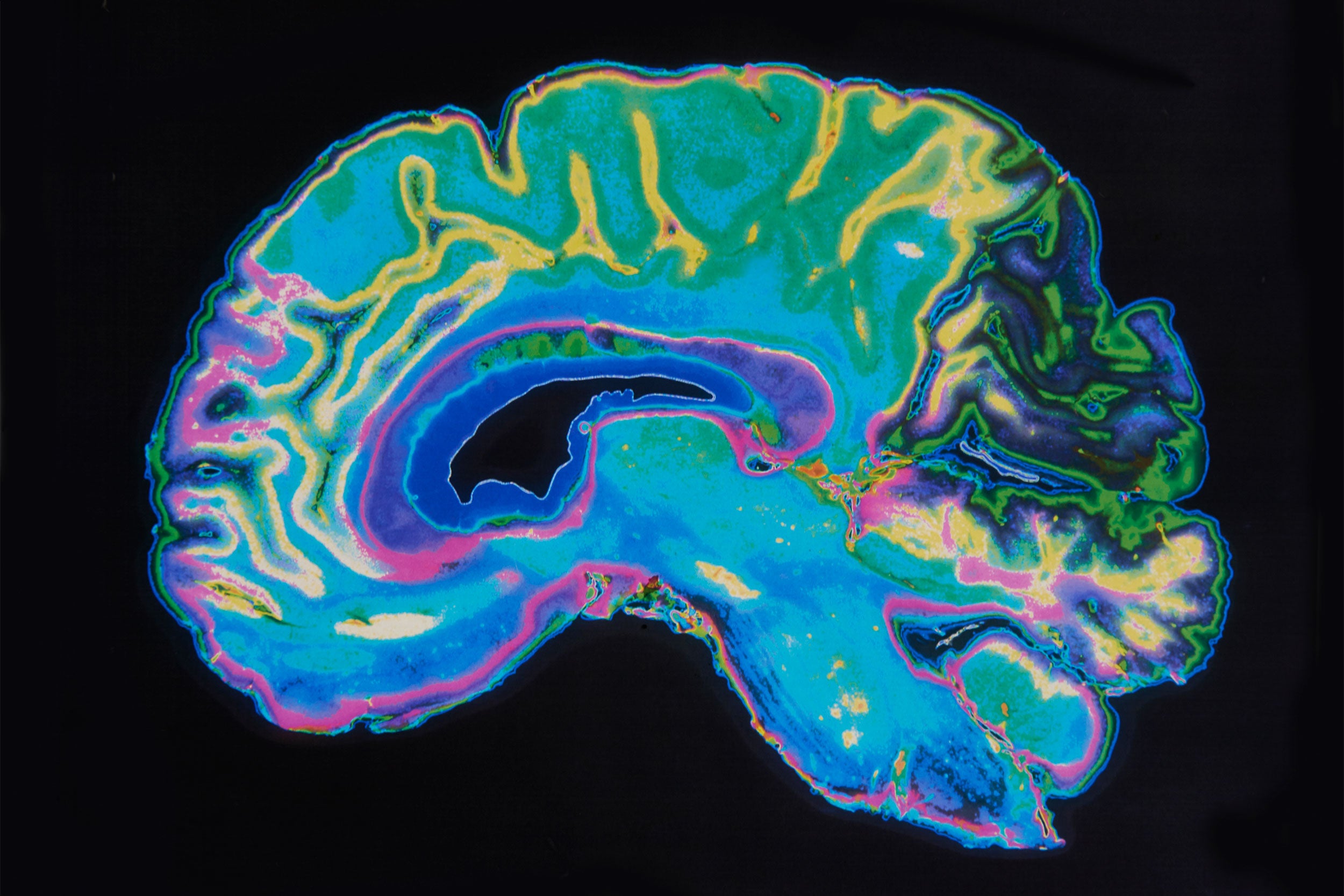
At the Massachusetts Eye and Ear Infirmary, Ketten lent her imaging expertise to the study of cochlear implants and how they interact with the human inner ear. The implants are small bundles of wires with dotlike electrodes that are inserted into a curled portion of the inner ear called the cochlea. The wires attach to a processor and a device worn on the belt that distributes signals that are interpreted by the person wearing the device. Through imaging and computer models of the ear’s structure, Ketten examines the importance of the curvature of the implant wires and placement of the individual electrodes in speech perception.

Professor of Otology and Laryngology Steven Rauch said Ketten also pushed the limits of scanning technology to provide preoperative assessments of what surgeons would find when they did implants in individual patients.
“Nowadays, the scanners are better and faster, but she was doing it when it was novel, pushing the envelope of what you can do with a scanner,” Rauch said. “She was really innovative and talented. She brought in a unique experience that wasn’t available anyplace else.”

Rauch and others who know her say Ketten is energetic with an active intellect. Even when working at MEEI, Rauch said, Ketten kept her hand in her marine work, borrowing tactics she used at Johns Hopkins and, with the blessing of the radiology department, bringing in marine specimens for nighttime scans.

Ketten worked with the New England Aquarium to examine ailing animals, including stranded seals and turtles whose health had to be assessed before they could be released.

“I didn’t want to get completely away from marine mammals,” Ketten said. “I would work during the day and had the lifestyle of a bat, also working at night. A gurney would come in with a peculiar triangle poking through the sheets.”

By the mid-1990s, interest in the impact of noise pollution and Navy sonar on marine mammals was growing, as was demand for someone with Ketten’s unique combination of skills. In 1997, she accepted a joint appointment as an associate scientist at Woods Hole and began dividing her time between the institution’s facilities in Falmouth, Mass., and MEEI in Boston.

Her marine mammal work took a jump five years ago when her lab got a CT scanner. In 2005, Woods Hole moved the lab into new facilities, including a large imaging suite, with a hoist and a ceiling rail to move heavy specimens from nearby freezers, and a scanner bed that can hold 500 pounds.

The facility’s use attests to the need. Between her own research and requests for examinations from zoos, aquariums, and other facilities, Ketten has examined everything from a hippo head to all sorts of marine mammals. She’s inspected corals and cuttlefish and even scanned the thick cables of the submersible Alvin, looking for damaged sections that need replacing.

To interested visitors, Ketten speaks enthusiastically about the differences between different species’ inner ear structure, illustrating her points with the scans, skulls, and boxes of bones that populate the shelves around her laboratory.

She describes how marine mammals have a much wider range of hearing than humans and how computer modeling is the only way to understand the hearing of large whales, like the blue whale, too big to be kept in an aquarium and too strong to be tested in the field.

“It’s just a magnificent ear. It’s very intriguing as an anatomist to get something like this and say, ‘What’s that head hearing?’” Ketten said. “These animals started evolving 50 million years ago and figured out early on how to have an underwater ear that hasn’t changed much.”

While sonar experiments by the U.S. Navy have come under fire as harming marine mammals and possibly causing strandings, Ketten said her research shows the issue is far more complex. Mass strandings are like car crashes, she said, with many causes. With decomposition and inaccessibility an issue, the cause of death in half the 1,000 strandings annually will never be known. Indications so far, she said, are that Navy sonar cause just a handful of animals to die each year.

Ketten recently returned from Madagascar, to which she was called because of the stranding of some 200 melonhead whales, which grow to 8 feet in length and weigh 1,000 pounds. The stranding stretched over 80 kilometers, and the animals were in a wide range of conditions. Some had been burned by local villagers while others were stranded in mangrove swamps that had to be explored with traditional canoes.

“It was a horrendous situation,” Ketten said. “This is going to be probably unsolved or unsatisfactorily resolved.”
Over the years at Harvard and Woods Hole, Ketten has conducted radiological exams on more than 1,000 individuals from more than 100 species. She’s authored 159 human case reports and 92 marine mammal reports. On any given day, her lab’s deep freezer holds the bodies of dolphins, turtles, and other animals awaiting examination.

“We’re getting a chance to look inside heads that we don’t normally get a chance to see inside,” Ketten said.
     

foundations environments animal, vegetable, + mineral medicine + health culture + society engineering + technology